





Outdoor or indoor? How field hockey differs from indoor hockey


Field hockey and indoor hockey are close cousins – but anyone who has played both knows they are two different worlds. Different surface, different pace, different rules and – most importantly for us – different equipment. In this post we explain how the two formats differ and how to put together a kit that will serve you well both on the pitch and in the hall.
Pitch versus court
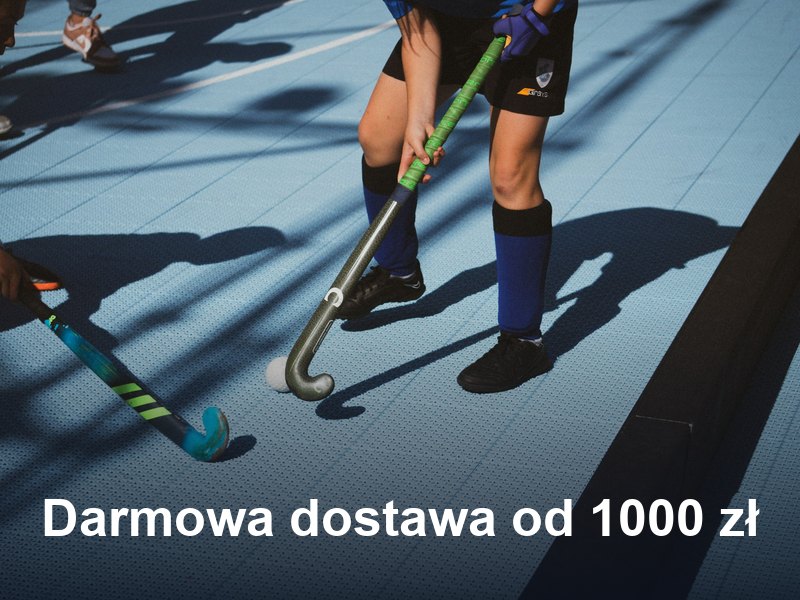
Outdoor field hockey is played on artificial turf roughly the size of a football pitch – 91.4 × 55 m, with 11-a-side teams. Indoor hockey takes place in a hall of about 36–44 × 18–22 m, with 6-a-side teams and the characteristic side boards the ball can rebound off, much like in ice hockey. The result? Indoor is faster, tighter and more technical – there is no time to trap the ball and think.
The key differences in the rules
- Playing the ball: indoors the ball may only be pushed – hitting and lifting the ball (except for a shot from the circle) are not allowed. Outdoors, hits and aerial play are part of everyday hockey.
- The boards: indoors the ball hardly ever goes out of play at the sidelines – the game flows without breaks and demands constant focus.
- Pace and pressing: a smaller pitch and shorter bench mean intense, short shifts – physically, indoor hockey can be even more demanding than the full-size pitch.
An indoor stick is not the same stick
The most common beginner mistake: playing indoors with an outdoor stick. Indoor sticks tend to be lighter and slimmer, but the weight depends on the model – the rules of both formats allow the same maximum stick weight (737 g). An indoor stick is designed for pushing, control and play along the boards: the slimmer profile makes it easier to keep the ball flat on the floor and play quick push passes, while the bow should be checked in the specification of the particular model. There is no hitting indoors, so many players choose a more control-oriented flex; composition and stiffness, however, come down to the model and personal preference.
If you are just starting your hockey journey, have a look at our guide on how to choose your first stick – the length-selection rules are the same for both formats, and our size guide. You will find sticks in the Hockey Sticks category of our shop.
Ball, protection and shoes
Outdoor and indoor balls fall under the same FIH range: a weight of 156–163 g and a circumference of 224–235 mm. Indoor models are often smooth, but dimples are not prohibited by the rules. Shin guards are useful in both formats – indoors, with tight play and the boards, they are strongly recommended. The biggest difference is footwear: for artificial turf choose turf shoes with a fine-studded sole, and for the hall – indoor shoes with a light, non-marking sole and good lateral stability.
When is indoor hockey played?
In Poland (and most of Europe) the indoor season runs through winter – roughly from November to February – when the weather does not favour outdoor pitches. In spring and autumn the game moves back onto the turf. That is why many players and clubs effectively need two sets of equipment: an outdoor one for the main season and an indoor one for winter.
One account, two worlds – how to shop at FHZ
In our store every product is marked as outdoor, indoor or universal. At the top of the page you will find the Outdoor (turf) / Indoor (hall) / Everything switch – one click filters the whole range for the format you play, with no digging through products you do not need. Visit the shop and see for yourself.
Not sure which stick or which gear to pick for the start of the indoor season? Write to us – we will help you decide before you spend your money.