





The drag flick – what it is and which gear makes it easier

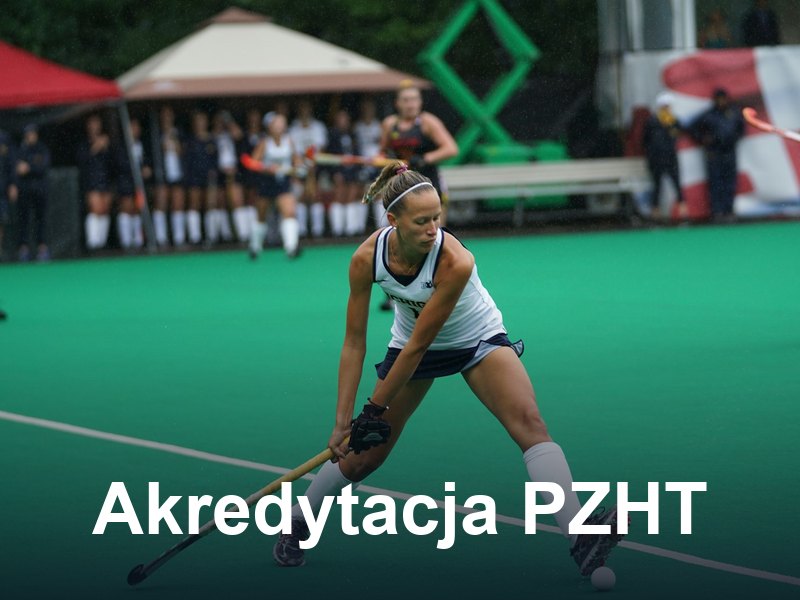
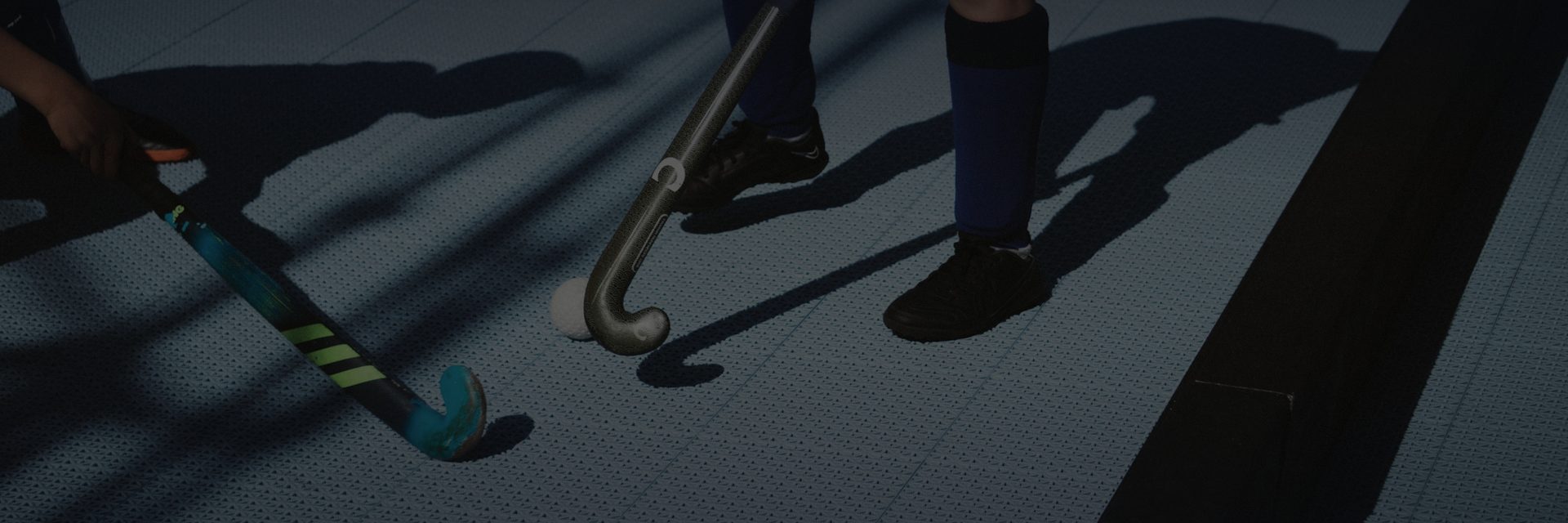
A penalty corner, the player at the edge of the circle crouches low, guides the ball along the surface with the head of the stick and suddenly launches it into the top corner. The drag flick is one of the most dangerous shots in field hockey – and a technique young players often ask us about. Here is how it works, what the rules say about it and which gear helps you master it.
How the drag flick works
In a classic hit the stick strikes the ball at a single point. In a drag flick the player collects the ball far behind the body, carries the stick forward and accelerates it with the whole kinetic chain – legs, hips, trunk and finally the wrists. Throughout the drag phase the ball stays in controlled, rolling contact with the playing surface and only leaves the ground at the moment of release. A longer drag phase can make it easier to give the ball speed and direction, but the result depends on the technique of the legs, hips, trunk, grip and the timing of the release: the ball can fly flat along the ground or under the crossbar. At the top level it exceeds 100 km/h – according to the FIH players routinely hit or drag flick the ball at speeds in excess of 90–100 km/h, and the best get it moving at up to around 125 km/h.
Why is it the weapon of the penalty corner? The FIH rules say that if the first shot at goal after a penalty corner is a hit, the ball must cross the goal-line – or be on a path that would take it across the goal-line – at a height of no more than 460 mm, the height of the backboard, before any deflection; otherwise the goal is not awarded. A flick or scoop has no such limit – the ball may travel at any height as long as it is not dangerous to an opponent. That is why many teams have a player who trains this technique for hours.
The stick: low bow makes the difference
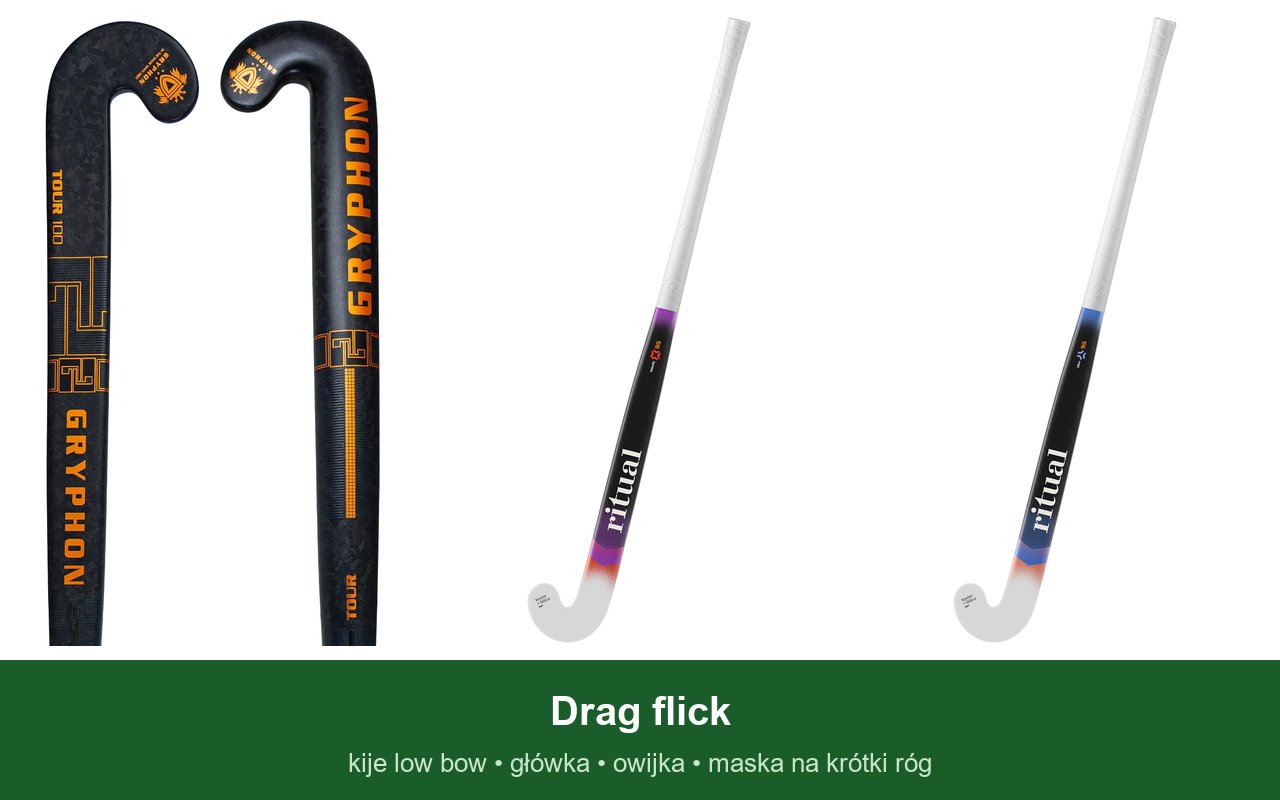
The bow profile of the stick has a big influence on the drag flick. The FIH rules limit the depth of the bow to 25 mm, but where the point of maximum bow sits matters too: on low bow sticks it lies low, close to the head, so the head gets under the ball more easily and the ball "sits" against the stick for longer during the drag. Low bow and extra-low bow are a common choice among penalty corner specialists, but the right profile depends on your technique and on how each manufacturer defines its profiles. We covered this in detail in our post on stick bow.
Examples of sticks with this profile are the Gryphon Tour PRO25 G26 – a top-end model with a very high carbon content – and the lighter, very dynamic Ritual Velocity 95, which combines a low bow with a stiff shaft. You will find low bow sticks from various brands under Hockey Sticks.
Head shape and shaft stiffness
A larger head (shapes many manufacturers call hook or maxi) helps when dragging the ball – it offers more contact area and forgives small inaccuracies. The second thing is stiffness: a stiffer stick – within one series usually the one with the higher carbon content – can return energy more efficiently with correct technique, so the ball leaves faster. For beginners it is a double-edged sword, though, because a stiff stick makes clean contact and control on the receive harder – more on that in our post on stick materials.
The grip: so the stick does not turn in your hands
The whole drag flick ends with a fast wrist rotation – if the grip is slippery or worn, the stick turns in your hands in the final phase and the ball sails wide. A fresh grip that holds well is a cheap way to make your shot more repeatable. You will find chamois and synthetic grips under Grips & Tapes.
On the other side: defending the penalty corner
Since a flick can fly at head height, the rules allow field players defending a penalty corner to wear a protective face mask – only for the duration of that play. One example is the light, transparent Grays mask with a quick fastening, which comes off right after the corner. You will find penalty corner masks under Helmets & Face Masks.
Some runners also wear a glove on the left hand, because they block the ball right at ground level – you will find an overview of models under Gloves.
Training penalty corners and not sure which stick to choose? Email us at [email protected] – we will suggest a model for your level and budget.