






Field glove – when you need one and how to choose it

Bruised knuckles and knocked fingers on the left hand are among the most common minor injuries in field hockey – the ball is hard, and sticks fly around in the battle for it. A field glove costs a fraction of the price of a stick and can save you weeks out of the game. Here is when you really need one and how to pick the right one.
Why the left hand?
In field hockey the left hand holds the top of the stick and guides it through most plays. When tackling – especially low, with the stick right at the surface – it is the hand closest to the ball and the opponent's stick. That is why the left, leading hand is the one most often protected, and field gloves are usually sold singly, for the left hand, not in pairs like winter gloves. Any additional protection, for the right hand for example, should be matched to your position, the form of the game and the competition rules.
When do you need a glove?
- Indoors – widely used and strongly recommended because of play low to the floor and along the boards, where the hand often glides just above the surface. FIH rules allow hand protection but do not require it – any obligation may come from the regulations of a particular club or competition.
- Outdoors in defence – in slide tackles and low interceptions the ball and the opponent's stick are closest to your hand.
- For juniors – young players are still learning stick control, so an accidental knock on the fingers is easy to come by.
Light or full protection?
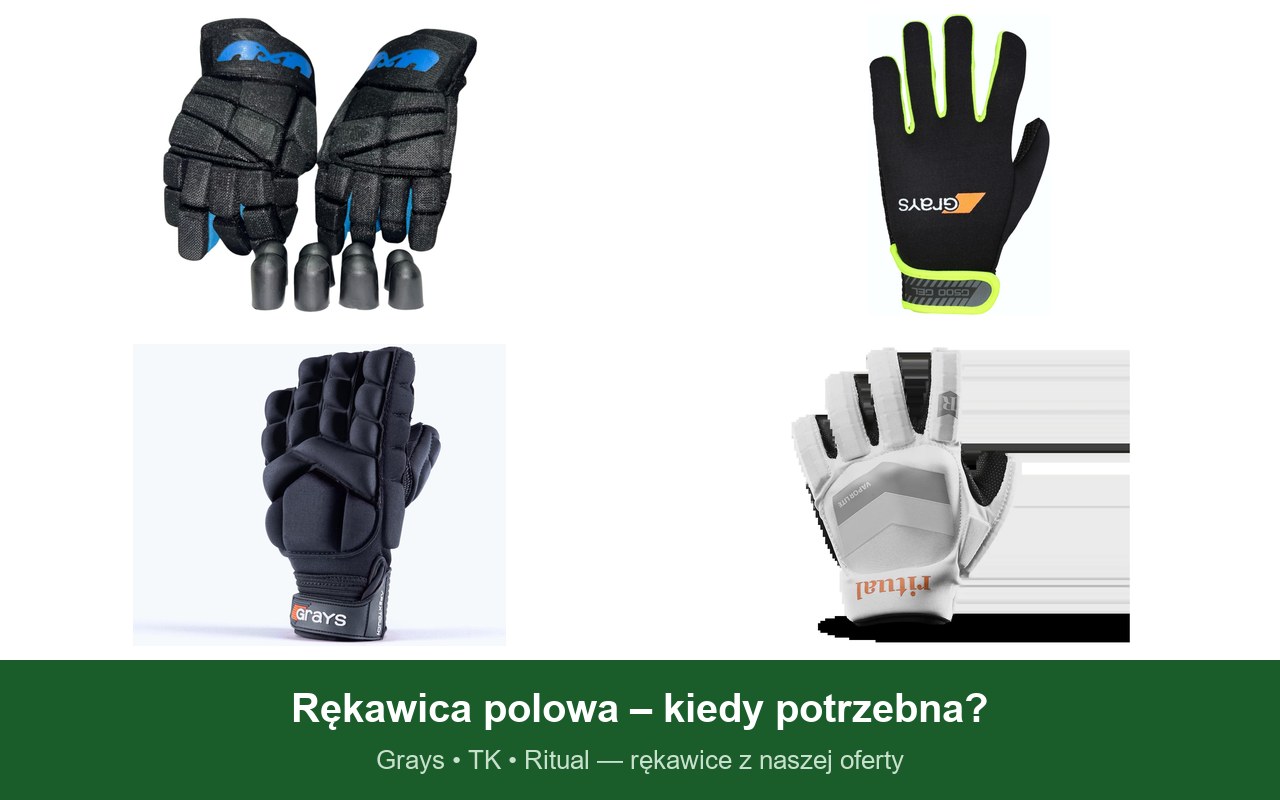
Field gloves can be roughly divided into two types. Light ones (touch, gel) shield the knuckles with a thin layer of foam or gel and barely change the feel of the stick – a good choice for forwards and playmakers. Heavier ones have thicker foam or hard shells over the knuckles and fingers – at the cost of a little feel they give protection that defenders and indoor players appreciate. Also look at the thumb, the palm and the fingertips: some models (open-finger or open-palm designs) deliberately leave them uncovered to keep full contact with the stick.
How to get the size right?
A glove should hug your hand: too loose and it twists during play, too tight and it restricts movement and tires the hand. Manufacturers usually quote the hand circumference measured below the knuckles (without the thumb) – measure it with a tailor's tape and compare with the size chart on the product page. The padding should sit securely over the areas that the design of a given model is meant to cover – in open-finger gloves, exposed fingertips are intended, not a sign of the wrong size.
What do we have in store?
You will find the models currently available, together with their size charts, under Gloves & Mitts. If you are putting a full kit together, also browse Player Protection. When choosing a stick, our guide will help: how to choose a stick.
Not sure which model suits your position on the pitch? Email us at [email protected] – we will help.